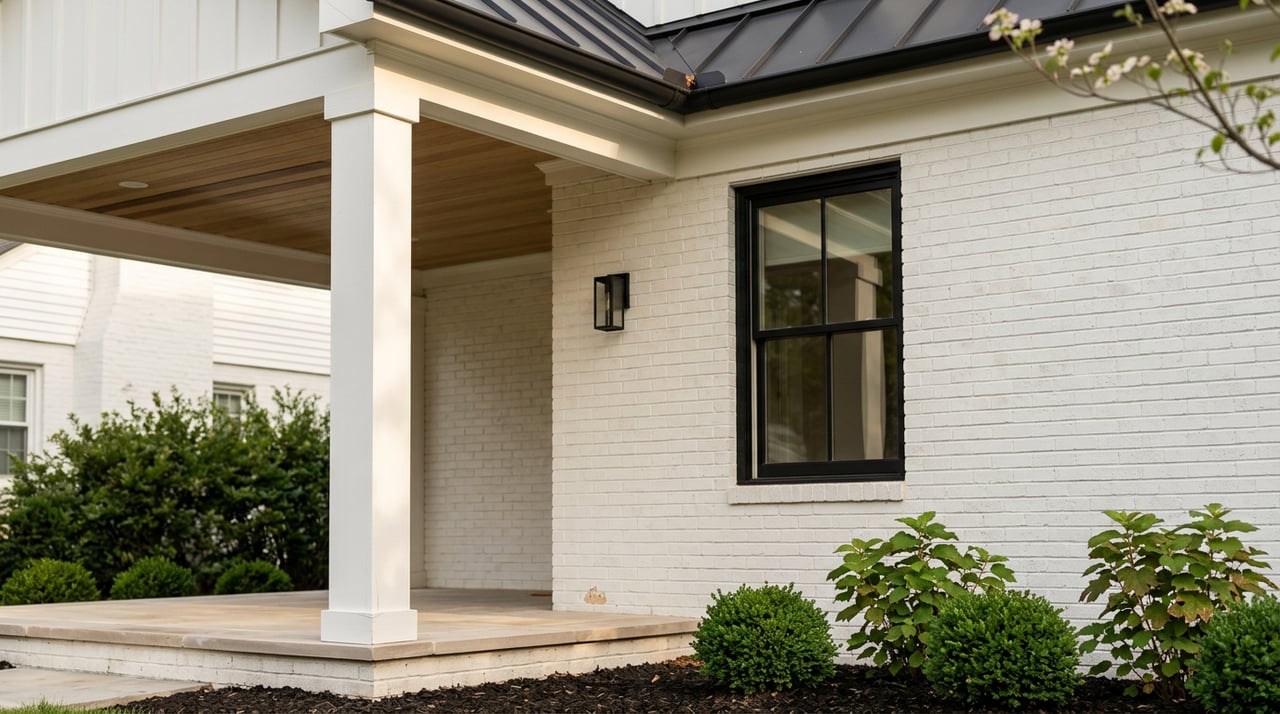
A $325,000 house in Algood and a $325,000 house in Cookeville look identical on the portal. Same beds, same baths, same drive time to Tennessee Tech. Cross the city line, though, and the monthly math shifts in ways the listing sheet never mentions. Some of it works in Algood's favor. A quieter piece works the other direction. Both matter, and neither one shows up until you start writing checks.
The line that changes your tax bill
Putnam County uses a three-layer property tax stack. The county rate applies everywhere. The city rate applies only if the address sits inside an incorporated municipality, and each of the four Putnam cities sets its own. Residential property is assessed at 25% of appraised market value before any rate is applied.
The current numbers, all set for the 2025 tax year:
| Layer | Rate per $100 of assessed value | Who sets it |
|---|---|---|
| Putnam County | $2.66 | Putnam County Board of Commissioners |
| City of Cookeville | $0.99 | Cookeville City Council |
| City of Algood | $0.3623 | Algood City Council |
| Unincorporated Putnam | $0.00 city add-on | none |
Sources: the Putnam County Trustee publishes the county rate; the City of Cookeville publishes its municipal rate; the Algood rate was held flat by the Algood City Council in its most recent budget cycle, as reported in Upper Cumberland news coverage of the May 2025 meeting.
Now put a house on top of those rates. A $325,000 home is assessed at $81,250 for tax purposes because Tennessee residential property is assessed at 25% of market value, a rule the Putnam County Property Assessor enforces countywide.
- County piece, everywhere in Putnam: $81,250 × 2.66% ≈ $2,161/year
- City piece if inside Cookeville: $81,250 × 0.99% ≈ $804/year
- City piece if inside Algood: $81,250 × 0.3623% ≈ $294/year
- City piece if the address is unincorporated: $0/year
Same appraised value, same county line, and the city column swings by about $510 a year between Algood and Cookeville. Over a seven-year hold, that is roughly $3,500 in property tax alone, before you touch a comparable home in the unincorporated pocket just outside Algood's city limits, which pays neither city rate.
The quiet catch on the water side
Here is the part that does not show up when a buyer runs the tax math on a napkin. Algood does not produce its own drinking water. It buys wholesale from Cookeville and resells it to Algood residents, and it also wholesales to West Overton on the back end.
That structure means Cookeville's cost pressures pass through the Algood meter. In May 2025, the Algood City Council approved a 13% water and sewer increase effective July 1 because Cookeville raised its rate to Algood. City Manager Keith Morrison explained the arithmetic plainly at the meeting: Cookeville prices the wholesale gallons Algood pulls, and Algood has to recoup those costs the same way any utility would. When a resident asked whether Algood could reduce its reliance on Cookeville water, Morrison said there is no alternative supplier.
So a buyer choosing Algood for the lower city tax rate is, at the same time, choosing a water utility whose price is set one step removed from local control. On a modest household bill, a 13% jump does not erase a $510 annual tax advantage, but it does compress it, and it introduces a variable that a Cookeville homeowner sees at the source rather than one step downstream. If two Cookeville rate hikes stack in a five-year window, the Algood tax edge gets thinner every time.
Unincorporated Putnam sidesteps both the city tax and the municipal water bill, but usually swaps them for a well, a septic system, and volunteer fire coverage instead of an inside-limits Insurance Services Office rating. That is a different set of trade-offs and worth pricing before assuming "unincorporated" simply means "cheaper."
The calendar most buyers miss at closing
Property tax proration at a Putnam County closing looks routine until you notice the two bills. The county bill is sent by the Putnam County Trustee. The city bill, if the property is inside Algood or Cookeville, is billed and collected separately by the city, not by the Trustee. Two envelopes, two due dates that happen to align.
Both are payable from the first Monday in October through the last day of February without interest. On March 1 interest begins accruing at 1.5% per month. Cookeville's charter caps municipal interest at 19.5%, after which delinquent city taxes are turned over to the Putnam County Clerk and Master's Office for court collection, and county delinquencies follow a similar path to Chancery Court under state law.
Three practical consequences for a buyer or seller near the fiscal year turn:
- If you close in September, taxes for the year are not yet billed, and your settlement statement will estimate them. If the rate ticks up when the county or city sets the new one, the estimate can drift.
- If you close in November, the seller has usually received the bills and may or may not have paid them. Confirm which envelopes were paid and which are still open, especially inside city limits where a second bill is easy to overlook.
- Tax notices are a courtesy, not a legal requirement. Tennessee treats property owners as presumed to know taxes are due. A buyer who never got a mailed notice still owes on time.
Reappraisal is the number that actually moves
The rate gets attention. The other lever is the appraised value the assessor puts on the property. Putnam reappraises on a five-year cycle, and the Assessor's office notes that in non-reappraisal years, values move only when the owner changes the property. During reappraisal, everyone gets a new notice, and the Board of Equalization opens for appointments through mid-June for owners who want to appeal.
For a buyer using a recent sale price as a proxy for future assessed value, the timing of the next Putnam reappraisal matters more than a fractional rate change. A rate that holds flat while appraisals rise across the board still produces a higher bill, which is why the state requires each taxing body to publish a certified tax rate meant to hold total revenue neutral through a reappraisal year. Whether the county or city then holds that rate or raises above it is a live budget decision every summer.
How to actually pencil a Putnam comparison
If you are weighing an Algood address against a Cookeville address against something on Old Walton Road outside both, a comparison worth trusting has four inputs, not two:
- Appraised value, not list price, for the tax math. Use 25% of that as assessed value.
- The combined rate that applies at that exact address. Inside Algood, the county rate plus $0.3623. Inside Cookeville, the county rate plus $0.99. Unincorporated, the county rate alone.
- Water and sewer, and whether the utility sets its own rate or resells from another city.
- The next scheduled reappraisal and how far your purchase price sits above the current appraised value on record.
Those four inputs are usually enough to explain why one home carries a hundred dollars more per month than another that looked cheaper on the search page.
A few questions that come up at the kitchen table
Does my mortgage escrow handle both bills automatically? Usually yes, if your lender was told at closing that the property sits inside a city. Escrow errors most often happen when a buyer moves from unincorporated Putnam into Algood or Cookeville, or vice versa, and the escrow analysis was built off the seller's old bill.
Can Algood's water rate rise again if Cookeville raises again? The pass-through structure Morrison described in May 2025 does not have a cap in it. If Cookeville's wholesale price to Algood moves, Algood's council has said the retail rate to residents has to move with it.
Is the address inside Algood city limits? Not every "Algood" mailing address is inside the corporate limits. The Putnam County Assessor and the City of Algood can both confirm from a parcel number, and it is worth confirming before you assume a city tax rate applies at all.
Two homes, two ZIP codes, one county line between them, and a monthly cost gap that a search filter cannot show you. If you would like a side-by-side pencil on a specific Algood or Cookeville property before you make an offer, Leslie Scott is happy to run the numbers with you. Let's Connect.